

petracpsadmin
Posts by :


Line Striping
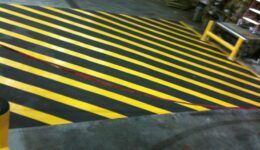
Traditional line striping involves minimum surface preparation and standard paint. Petra’s high performance line striping requires concrete be mechanically prepped and coated with an industrial-strength epoxy resin, which inevitably allows them to have a longer lifespan. Line striping is important for increasing safety and demarcating different functioning areas in a facility using lines stripes to designate an aisle way.
Anti-Slip
Safety should be the chief value of every facility manager! Petra helps them achieve this by creating anti-slip surfaces. The concrete coatings have silica sand or aluminum oxide aggregate imbedded into the resin and increasing the co-efficient of friction. Although this is important in every facility, it is even more so in any facility that is has constant running water such as food processing plants, paper mills, commercial kitchens, and water or wastewater treatment plants.

Wall Systems
Petra wall systems create a cleaner, more sanitary environment ideal for food processing plants and clean rooms. The wall coatings consist of an epoxy coating imbedded with a fiberglass scrimcloth to help prevent future cracking as well as protection from hot water. They are also finished with a high gloss urethane top coat that provides better gloss retention and UV resistance, which is highly recommended when installing a white coating.

Vapor Control
VAPOR CONTROL SYSTEMSEvery concrete slab runs the risk of being affected by high vapor content. Petra is able to reduce the amount of vapor transmitted through concrete by installing a vapor control coating. The vapor control coating allows for a Petra concrete coating, or any other floor covering to be installed without it being damaged by vapordrive. Calcium chloride and other various types of vapor testing are performed by Petra.

Concrete Repair
Patching concrete is not only pivotal for success in concrete coatings, concrete polishing, concrete stains, and concrete sealers, it is also important in and of itself. A concrete slab filled with spalls, holes, cracks, and other damage does not only look bad, but it also creates safety concerns and can hinder the operations of any traffic or production. Petra patch kits are available to be installed by either Petra or an in-house maintenance department. The majority of concrete repair can fall in one of two categories: patching larger holes. PATCHINGThe best way to repair large holes is through a proper mixture of epoxy resin and silica sand. Petra Polymers, Petra Patch is an easy to use kit, designed to fill these areas. Whether a facility owner wants to repair pot holes to help the flow of forklift traffic, or if Petra is repairing large holes in preparation of a concrete coating, Petra Patch creates the level surface that is required.CRACK REPAIRFilling in thin cracks and small divots is important for creating a sound slab of concrete. Petra Polymers, Rapid Patch is specifically designed for these types of products. It a thin urethane engineered to make concrete perform the way it was […]

Concrete Sealers
There is a common misunderstanding of what constitutes a concrete sealer. Some are acrylic, others are silicates, and some are urethane or epoxy-based. Skilled in all types, Petra has earned the reputation for helping general contractors, architects, engineers, and facility owners choose the right type. Concrete sealers are commonly found in warehouses, but may be applied over any type of concrete. There are two major ways to install a sealer depending on the surface preparation: the traditional way is to mechanically scrub the concrete and seal it, whereas the more extensive way is to diamond grind the concrete and seal it. GRIND AND SEALGrind and seal refers to using diamond grinders to remove the top layer of concrete before applying a sealer to it. It is normally needs to be packaged with a certain amount of patching that needs to be performed on the concrete.SCRUB AND SEALThe other way to install a concrete sealer is to mechanically scrub the concrete before applying the sealer. This is a more cost-effective approach, but not suitable for concrete that has mastic or thin set residing on top of it. Although it is not necessary, it is often bid with concrete repair..

Concrete Stains
Installing a concrete stain requires a comprehensive understanding of mechanical concrete preparation, product knowledge, and project management. Whether acrylic based or acid based, Petra has a proficient aptitude in concrete stain systems and has installed them in restaurants, offices, and a number of other places.

Concrete Polishing
In recent years, concrete polishing has become extremely popular in warehouses, retail, schools, and a host of other industries. The process involves the use of diamond grinders to remove mastic, thin set, and surface substances. The concrete is then grinded in multiple passes using the diamonds. After several passes, the concrete is then polished with resin pads to achieve the desired polishing level. The total number of passes is determined by the condition of the concrete and the desired finish. Every concrete polish job requires a densifier and sealer. Other features such as applying a colored dye, or using a high-speed burnisher on the final finish are used to enhance the polishing process. Petra’s competency in concrete polishing projects has provided a competitive edge in packaging construction projects. For instance, the restaurant industry has began using epoxy or urethane concrete coatings in the kitchen, while concrete polishing the dining area.